


The phone call every pilot dreads isn't the one from your mechanic about a surprise squawk. It's the one you never want your family to receive, the call that says something went wrong in the air and the airframe couldn't protect you.
For decades, general aviation pilots accepted sheet metal as the standard. Aluminum was what airplanes were made of, period. But that acceptance came from limited options, not engineering superiority. Today, a growing body of crash survivability data, structural fatigue research, and real-world accident analysis tells a story every owner-operator needs to hear: the material surrounding you in flight matters more than most pilots realize.
If you're weighing your next aircraft purchase, whether you're stepping up from a training platform, transitioning from a legacy Cessna or Piper, or comparing Diamond against Cirrus, the composite versus aluminum question isn't academic. It directly affects your insurance premiums, your maintenance budget, your resale timeline, and most importantly, your family's confidence every time you push the throttle forward.
This isn't a sales pitch dressed as science. It's a data-driven breakdown of what composite construction actually delivers in crashworthiness, structural longevity, maintenance predictability, and total cost of ownership compared to traditional aluminum airframes. We'll walk through the engineering principles, reference NTSB findings and industry safety trends, and give you a practical framework for evaluating which construction philosophy fits your mission and your family's peace of mind.
How Composite Construction Changes the Safety Equation
Energy Absorption: What Happens in the First 200 Milliseconds
When an aircraft experiences a sudden deceleration event, whether it's a forced landing in rough terrain, a runway excursion, or a controlled-flight-into-terrain scenario, the airframe's ability to absorb and distribute energy determines survivability. This is where composite construction fundamentally diverges from legacy aluminum.
Aluminum airframes absorb impact energy through deformation. Sheet metal buckles, rivets shear, and structural members fold. The problem is that aluminum deformation is often unpredictable. A crumpled fuselage can intrude into the cabin space, and structural failures can cascade in ways that compromise the protective shell around occupants.
Composite structures absorb energy through controlled fiber fracture and delamination. Carbon fiber and fiberglass composites are engineered to dissipate kinetic energy progressively, spreading force loads across a wider structural area. As one aerospace structural engineer put it: "Composite construction isn't just about weight savings; it's about predictable maintenance cycles and superior energy absorption during impact events."
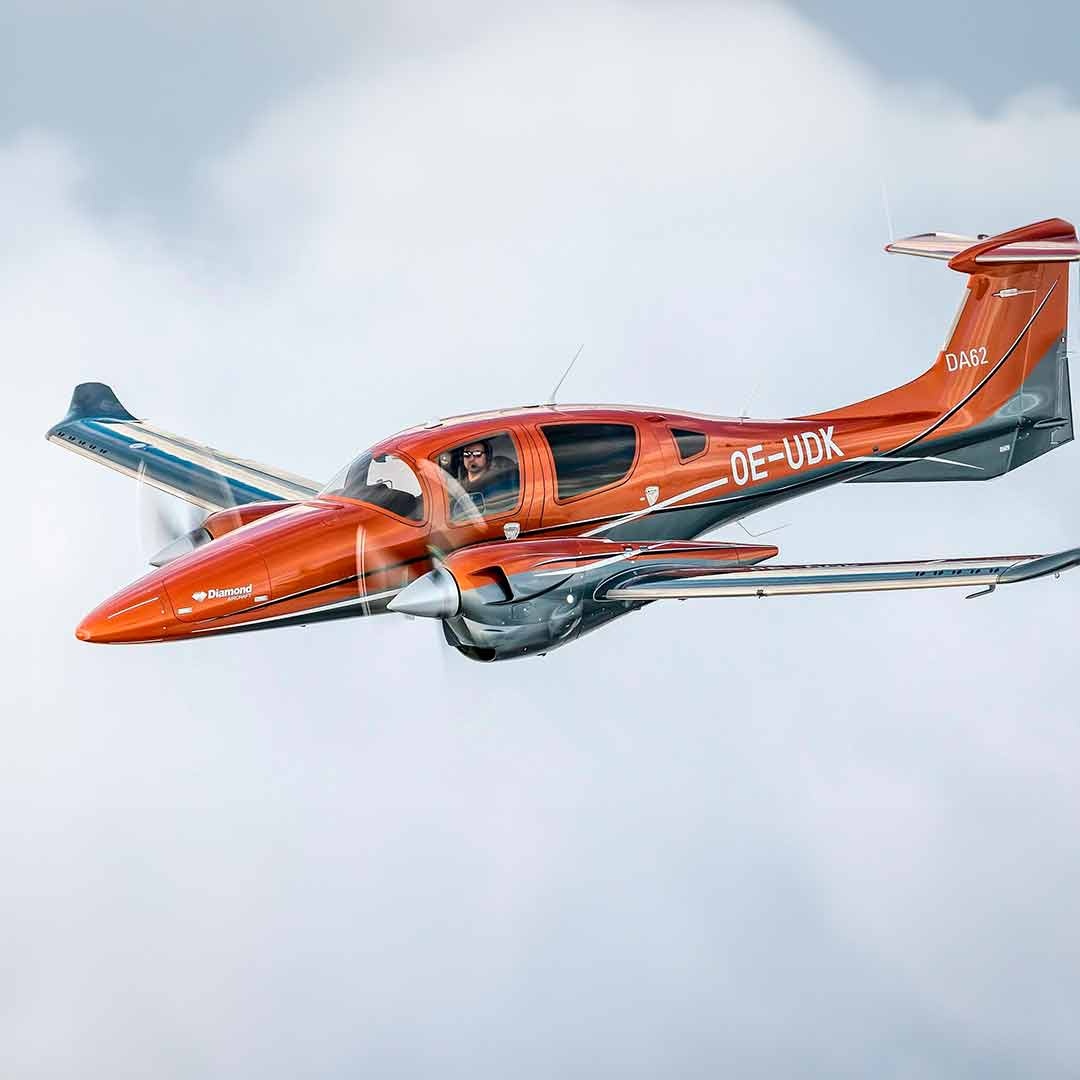
Diamond Aircraft's carbon fiber reinforced polymer (CFRP) safety cell is built specifically around this principle. The cockpit structure holds its geometry under loads that would collapse a comparable aluminum cabin. In survivable accidents, maintaining cabin volume is the single most important factor in occupant protection, and composites excel at exactly this.
Real-World Accident Data and Survivability Trends
General aviation fatal accident rates have trended downward by over 15% in regions with high adoption of advanced glass cockpits and modern airframe designs. Avionics deserve significant credit here. Situational awareness tools like synthetic vision, traffic alerting, and autopilot intervention prevent accidents from happening in the first place. But airframe construction determines what happens when prevention fails.
NTSB accident reports consistently point to cabin intrusion and post-crash fire as the two leading causes of fatality in survivable GA accidents. Composite airframes address both:
- Cabin integrity: Composite safety cells resist deformation more predictably than aluminum, maintaining the survival space around occupants.
- Fire resistance: Modern aerospace composites have higher ignition thresholds than aluminum alloys. While no material is fireproof, composites don't conduct heat the way aluminum does, buying critical evacuation seconds.
For the safety-conscious owner-operator flying family members on weekend trips or business associates to regional meetings, these aren't abstract engineering details. They're the reason your spouse says yes to the next flight.
Spin Resistance and Aerodynamic Safety by Design
Beyond crashworthiness, modern composite aircraft like Diamond's DA40 and DA62 incorporate aerodynamic safety features that aluminum legacy platforms simply weren't designed for. The DA40's wing geometry produces inherent spin resistance, a characteristic that has made it a preferred training platform worldwide and translates directly to owner-operator safety.
This isn't about dumbing down the airplane. It's about designing out the most dangerous aerodynamic regimes that claim GA lives every year. Stall-spin accidents remain one of the top killers in general aviation. An airframe that resists departure from controlled flight at the design level provides a safety margin that no avionics suite can replicate.
The Maintenance Reality: Composites vs. Aging Aluminum
Corrosion, Fatigue, and the Hidden Cost of Time
Every aluminum airframe is fighting two relentless enemies: corrosion and metal fatigue. Both are progressive, both are expensive to monitor, and both get worse as airframes age. A 1975 Cessna 182 with 4,000 hours on the airframe requires increasingly invasive inspections to detect fatigue cracking in wing spars, carry-through structures, and fuselage skins. Corrosion in coastal environments like South Florida accelerates this timeline dramatically.
Composite airframes don't corrode. Full stop. There's no galvanic reaction between dissimilar metals, no filiform corrosion creeping under paint, no intergranular attack in salt air environments. For owner-operators based at coastal airports, Fort Lauderdale, the Gulf Coast, the Outer Banks, this single advantage translates directly into lower annual inspection costs and fewer surprise maintenance events.
Industry data shows composite aircraft carry up to 20% lower annual inspection costs compared to aging aluminum airframes, primarily because of reduced corrosion monitoring and fatigue inspection requirements. Over a five-year ownership period, that 20% compounds into thousands of dollars of predictable savings.
Inspection Simplicity and Predictable Maintenance Cycles
Aluminum aircraft inspections involve removing panels, checking rivet lines, looking for skin buckling, and performing eddy current or dye penetrant testing on critical structural members. As airframes age past 30 or 40 years, Airworthiness Directives pile up, each one adding inspection requirements and potential grounding scenarios.
Composite inspections rely primarily on visual assessment and, when needed, tap testing or ultrasonic evaluation. The structural health of a composite panel is generally visible from surface condition. There's no hidden corrosion eating away at internal structure where you can't see it.
For owner-operators who track maintenance costs closely, the predictability of composite maintenance is a real advantage. You can budget annual inspections with higher confidence, and your aircraft spends less time in the shop, which means more time flying your mission.
Composite Repair: Addressing the Elephant in the Hangar
The most common objection to composite aircraft is repair cost. "What happens when I get a hangar rash ding? Isn't composite repair insanely expensive?"
Honest answer: minor composite repairs are often comparable to or slightly more expensive than equivalent aluminum repairs. A small impact area might require resin infusion and curing rather than a simple rivet-and-patch fix. That said, the frequency of repairs is typically lower because composites resist the minor dents and dings that plague thin aluminum skins.
For structural damage, composite repair requires trained technicians and proper facilities, which is exactly why choosing a dealer with factory-trained maintenance capability matters. Premier Aircraft's FAA-approved repair stations at Fort Lauderdale (FXE), Fort Worth (KFTW), and Norwood (KOWD) are staffed by technicians specifically trained in Diamond composite repair procedures, ensuring repairs meet factory specifications and maintain airframe integrity.
The key insight here: composite repair availability is a dealer selection criterion, not an aircraft selection objection. When your maintenance partner has the right training and tooling, composite repair is routine, not exceptional.
Total Cost of Ownership: Where the Numbers Tell the Story
Fuel Efficiency and the Jet-A Advantage
Modern Diamond aircraft equipped with Austro AE300 engines burn 7.5 to 8.5 gallons per hour of Jet-A fuel. Compare that to traditional AvGas-burning engines in legacy platforms consuming 12 to 15-plus gallons per hour, and you're looking at a 35 to 40% reduction in fuel costs on every single flight.
As one general aviation market strategist noted: "Fuel efficiency and Jet-A availability are rewriting the cross-country mission profile. Pilots are trading legacy AvGas dependency for global engine flexibility and lower hourly burn rates."
But the advantage goes beyond cost per gallon. Jet-A is available at virtually every airport worldwide, while AvGas availability is shrinking at smaller fields. For the owner-operator flying regional business trips to smaller airports, Jet-A capability eliminates fuel-stop planning headaches and opens up direct routing options that AvGas dependency can't match.
Over 200 flight hours per year, fuel savings alone between a Jet-A Diamond single and a comparable AvGas legacy platform can exceed $8,000 to $12,000 annually. Over five years, that's $40,000 to $60,000 in fuel savings that directly offsets the purchase price difference.
Insurance and Resale: The Compounding Advantages
Modern composite aircraft with glass cockpits carry lower insurance premiums than equivalent legacy platforms, particularly when the owner completes manufacturer-approved transition training. Owner-operators who go through transition training programs report 60% fewer insurance premium adjustments during the first 12 months of ownership, meaning your rates stabilize faster and at a lower baseline.
On the resale side, the data is equally compelling. Aircraft equipped with Garmin G1000 NXi avionics sell 30 to 45 days faster on the secondary market than those with legacy analog or early-generation glass panels. For Diamond specifically, strong market demand from both individual buyers and flight schools creates liquidity that many legacy platforms can't match. When you're ready to upgrade from a DA40 to a DA62, your current aircraft moves in weeks, not months or years.
The Five-Year Ownership Picture
When you combine lower fuel burn, reduced inspection costs, competitive insurance premiums, and strong resale liquidity, the total cost of ownership for a modern composite Diamond aircraft often comes in below a comparable legacy aluminum platform, despite a higher initial purchase price.
This is the math that changes the conversation with your financial advisor and your spouse. It's not about spending more on an airplane. It's about spending smarter on an ownership experience that's safer, more predictable, and more financially efficient over the life of your ownership.
Making the Decision: A Practical Framework
Ask These Five Questions
What's my annual inspection budget tolerance? If surprise $15,000 annual inspections on a 40-year-old airframe keep you up at night, composite predictability is worth the premium.
Where do I fly most often? Coastal environments punish aluminum. Regional airports with limited AvGas favor Jet-A capability.
Who flies with me? If family members are regular passengers, crashworthiness data should weigh heavily in your decision.
What's my ownership horizon? If you plan to own for 3 to 5 years and upgrade, resale liquidity matters. Modern composites with G1000 NXi move fast.
Do I have access to qualified composite maintenance? This is the practical question that ties everything together. The best airframe in the world needs the right maintenance partner.
The Dealer Ecosystem Matters
A former NTSB investigator summed up the modern owner-operator's decision framework well: "The modern owner-operator isn't buying speed; they're buying predictability, safety, and time. Composite construction and integrated avionics are no longer luxuries, they're baseline requirements for sustainable ownership."
But those baseline requirements only deliver their full value when backed by an integrated ecosystem of sales expertise, factory-trained maintenance, transition training, and long-term relationship support. Choosing composite is the first smart decision. Choosing the right partner to support that decision is the second.
The safety data, the maintenance economics, and the total cost of ownership all point the same direction: modern composite construction isn't just a material upgrade. It's a fundamentally different approach to aircraft ownership, one that puts the things owner-operators care about most front and center. Safety for your family. Predictability for your budget. Confidence every time you fly.
If you're ready to see how these numbers apply to your specific mission profile, schedule a demo flight at one of Premier Aircraft's three locations, Fort Lauderdale, Fort Worth, or Norwood, and experience the composite difference firsthand. Our team will walk you through a personalized total cost of ownership analysis, transition training options, and financing structures built for owner-operators who fly smarter, not just faster. Reach out to Premier Aircraft today and take the first step toward modern, predictable, and safer aircraft ownership.


